
In modern logistics and warehousing systems, the sealing performance of loading areas is directly related to the stability of the internal warehouse environment and the safety assurance of product quality. When a truck enters the loading area, the gap between the vehicle body and the warehouse door often serves as an entry point for rainwater, insects, dust, and a breach in thermal insulation. As a “sealing bridge” connecting vehicles with warehouses, mechanical dock seals not only address a series of environmental control issues but also bring dual benefits of space optimization and operational efficiency improvements to businesses.
I. Superior Structure: The Perfect Integration of Materials and Design
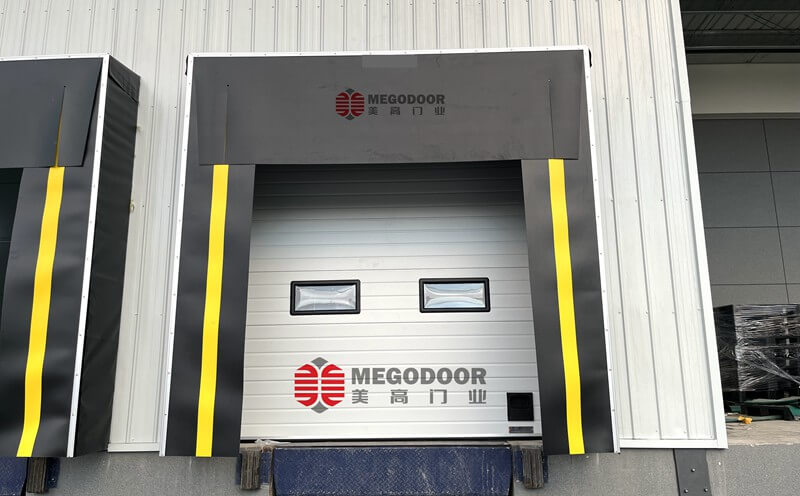
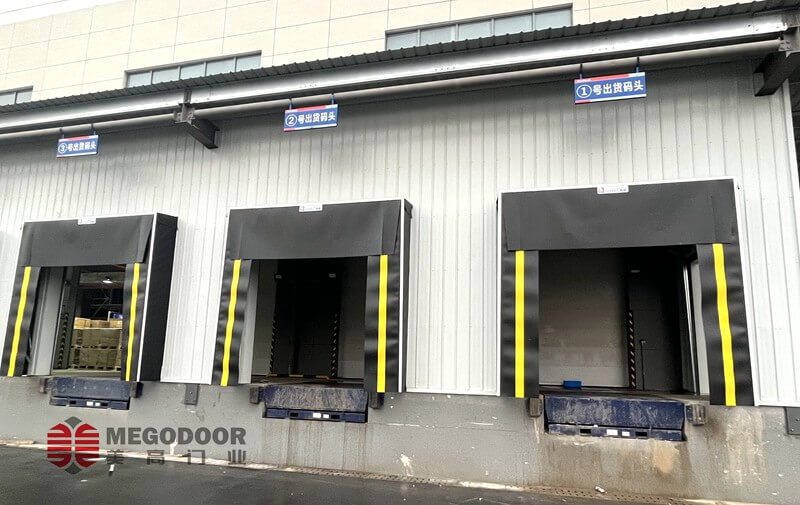
The front side of the mechanical dock seal is composed of three pieces of high-density polyester fiber meticulously combined, while the frame uses high-strength aluminum alloy and galvanized square tubes. This design ensures overall stability while providing excellent flexibility, allowing the seal to fit snugly against the edges of various types of cargo boxes, whether it’s regular trucks or standard containers, forming a seamless seal. The canopy part is made from wear-resistant, tough specialty fiber materials that effectively close gaps around vehicles and withstand strong wind pressure and snow loads, ensuring safe and continuous loading operations even in harsh weather conditions.
II. Multi-Effect Protection: Comprehensive Environmental Barriers
Mechanical dock seals provide exceptional sealing between vehicles and warehouses, establishing a four-layer protection system:
- Rain Barrier: Effectively blocking external rainwater intrusion, protecting goods from moisture damage, and maintaining a dry internal warehouse environment.
- Insect Defense Line: Eliminating gaps between vehicles and warehouse doors, cutting off insect entry routes, and ensuring biological safety for sensitive products such as food and pharmaceuticals.
- Dust Barrier: Blocking external dust and pollutants, enhancing warehouse cleanliness, and reducing the risk of product contamination.
- Temperature Guardian: Isolating external warm air, preserving cold air inside refrigerated warehouses, reducing energy consumption, and saving up to 15-25% in cooling costs annually.
III. Space Optimization: Redefining Loading Areas
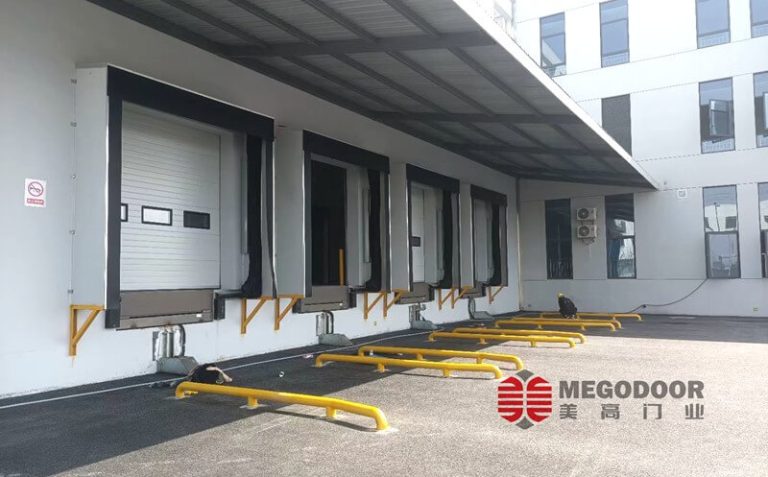
Traditionally, loading platforms occupy valuable indoor space. The innovative application of mechanical dock seals changes this scenario—by moving loading platforms outside buildings and integrating retractable dock seals to form independent loading rooms, valuable warehouse space can be released, increasing storage capacity by 10-15%. These loading rooms feature a retractable design, allowing vehicles to precisely align their cargo box exits with warehouse doors through reverse parking. Upon contact between the cargo box edge and the mechanical dock seal, immediate sealing occurs, achieving efficient space utilization with “external loading and internal storage.”
IV. Operational Convenience: Enhancing Logistics Efficiency
Mechanical dock seals not only solve environmental control issues but also significantly enhance logistics operations. The mobility of these loading rooms allows for more flexible vehicle parking without requiring precise alignment, greatly reducing turnaround times. Moreover, all-weather loading operations become possible—regardless of rain, wind, or snow, staff can efficiently complete loading tasks in dry, safe environments, minimizing interruptions due to weather conditions and improving overall logistics efficiency by over 20%.
V. Energy Savings and Cost Reduction: Long-Term Value Realization
With continuously rising energy costs, the thermal insulation properties of mechanical dock seals offer significant economic benefits to enterprises. By effectively blocking air exchange between the inside and outside of cold storages, they reduce frequent starts of refrigeration equipment and extend equipment lifespan. After installing high-quality mechanical dock seals, a standard cold storage can save approximately 50,000to80,000 in electricity costs annually, with an investment payback period generally within two years. Additionally, reduced product losses and quality complaints further enhance the hidden benefits for enterprises.
Essential Guardians for Safe Logistics
Rain and insect-proof mechanical dock seals are not just physical connectors; they are crucial nodes in modern logistics systems for environmental control, energy management, and operational efficiency. In today’s world where food safety standards are becoming increasingly stringent and logistics efficiency demands are on the rise, choosing high-quality mechanical dock seals signifies a commitment to product quality, cost control, and personnel safety. When rain is kept out, insects cannot enter, and cold air no longer escapes, what we see is not just a dock seal but a concrete practice of corporate refined management and sustainable development concepts. At every loading moment, mechanical dock seals silently guard, building the first line of defense for efficient, safe, and green modern logistics.