

In factories, warehouses, logistics centers, and buildings with frequently used freight elevators, elevators handle a large volume of cargo transportation every day. Forklifts, pallet trucks, and carts move in and out constantly, causing elevator cabins to remain under heavy-duty operation for long periods. Even minor mistakes can easily lead to collision damage.
Especially in industrial plants and logistics warehouse environments, common problems during cargo transportation include:
- Forklifts hitting elevator cabin walls
- Pallet corners scratching stainless steel panels
- Trolleys impacting door frames and corners
- Cargo handling causing deformation and wear inside elevators
These issues not only affect the appearance of the elevator, but may also increase maintenance costs and, in severe cases, affect normal elevator operation.
As a result, more and more companies are installing polymer elevator anti-collision guardrails inside freight elevators, industrial elevators, and logistics elevators to improve safety protection.
What Are Elevator Anti-Collision Guardrails?
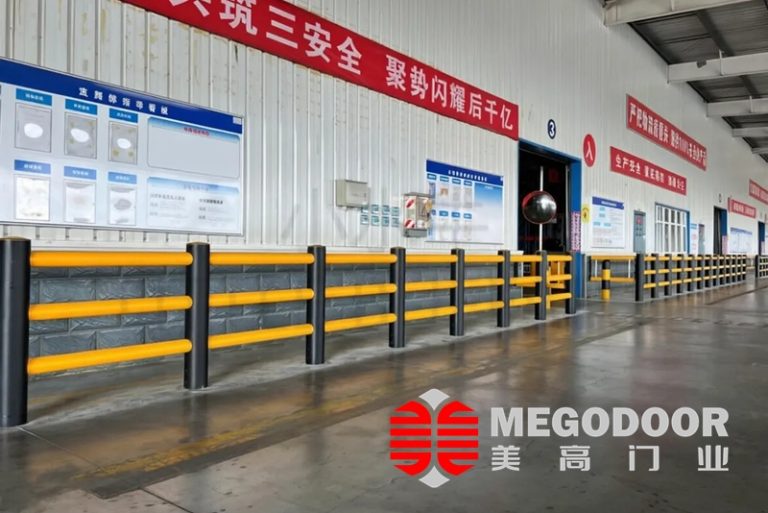
Elevator anti-collision guardrails are mainly used to protect the internal structure of elevator cabins. By creating a buffering protection area, they help reduce direct impacts on elevator walls, door frames, and corners during cargo transportation.
Compared with traditional stainless steel guardrails, polymer flexible anti-collision guardrails provide better shock absorption performance. When collisions occur, they can absorb part of the impact force, reducing the risk of elevator damage.
They are commonly used in:
- Factory freight elevators
- Warehouse logistics elevators
- Pharmaceutical workshop elevators
- Food factory freight elevators
- Automated logistics buildings
- Supermarket back-end freight elevator areas
Advantages of Polymer Elevator Anti-Collision Guardrails
1. Shock Absorption and Collision Protection
Polymer materials have a certain level of flexibility, making them more suitable for high-frequency logistics handling environments compared with traditional metal guardrails.
When forklifts, pallets, or cargo accidentally collide with the elevator, the guardrails can provide cushioning protection and help reduce:
- Scratches on elevator cabins
- Dents in stainless steel panels
- Corner damage
- Door frame deformation
This helps reduce maintenance costs and downtime.
2. Corrosion Resistance and Long Service Life
Industrial elevator environments can be relatively harsh, including:
- Humid environments
- Dusty areas
- Cold storage facilities
- Washdown areas
Polymer anti-collision guardrails offer excellent corrosion resistance and are not prone to rust, making them suitable for long-term industrial use.
Compared with ordinary metal guardrails, they are easier to maintain over time.
3. Flexible Installation Without Affecting Elevator Operation
Polymer elevator anti-collision guardrails use a modular installation structure and can be customized according to different elevator sizes.
Features include:
- Easy installation
- No obstruction of visibility
- No interference with elevator door operation
- Removable for maintenance
- Suitable for various elevator cabin specifications
They are also convenient for retrofitting older freight elevators.
Which Applications Are More Suitable for Elevator Anti-Collision Guardrails?
The following scenarios are particularly recommended for installing elevator anti-collision guardrails:
Logistics Warehouses
Frequent forklift traffic and high cargo turnover rates increase the risk of collisions inside elevators.
Factory Freight Elevators
Frequent material transportation with pallets and carts can easily cause elevator damage.
Pharmaceutical and Food Industries
These industries often require cleaner and more organized environments and prefer to reduce damage to elevator interiors.
Automated Logistics Projects
AGVs and automated transport systems operate frequently, requiring improved long-term elevator reliability.
MEGODOOR Polymer Anti-Collision Guardrail Solutions
As a manufacturer focusing on industrial plants and logistics warehouse projects, Nanjing MEGODOOR Industrial Doors Co., Ltd. can provide:
- Polymer flexible anti-collision guardrails
- Flexible safety bollards
- Dock protection guardrails
- Pedestrian and vehicle separation barriers
- Elevator anti-collision protection solutions
The products can be customized according to on-site requirements and are suitable for:
- Factories
- Warehouses
- Pharmaceutical workshops
- Food factories
- Automated logistics centers
- Cold-chain warehouse projects
These solutions help reduce equipment collision risks and improve on-site safety management.
Elevator Anti-Collision Guardrails Are Not Just Protection — They Are Long-Term Cost Control
For frequently used freight elevators, many damage issues are not caused by the elevator equipment itself, but by accumulated impacts during long-term cargo transportation.
Compared with frequent repairs, stainless steel panel replacements, and elevator downtime, installing polymer elevator anti-collision guardrails is often a more economical and practical long-term protection solution.
Reasonable anti-collision protection can not only extend elevator service life, but also improve logistics transportation safety and help daily operations become more stable and efficient.