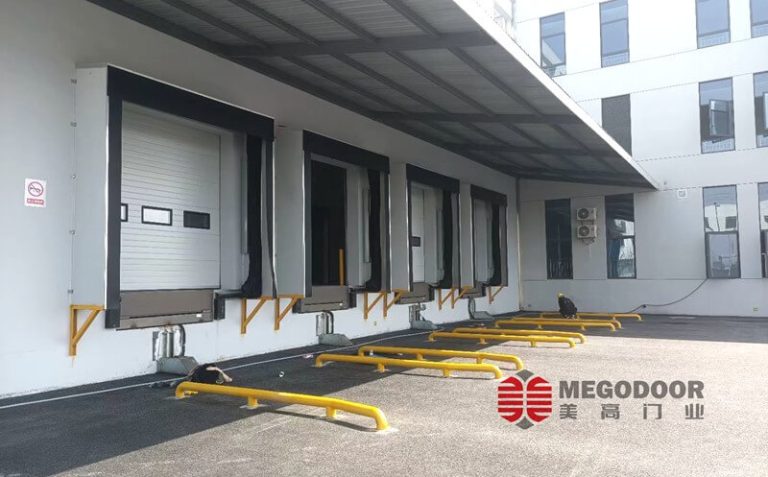

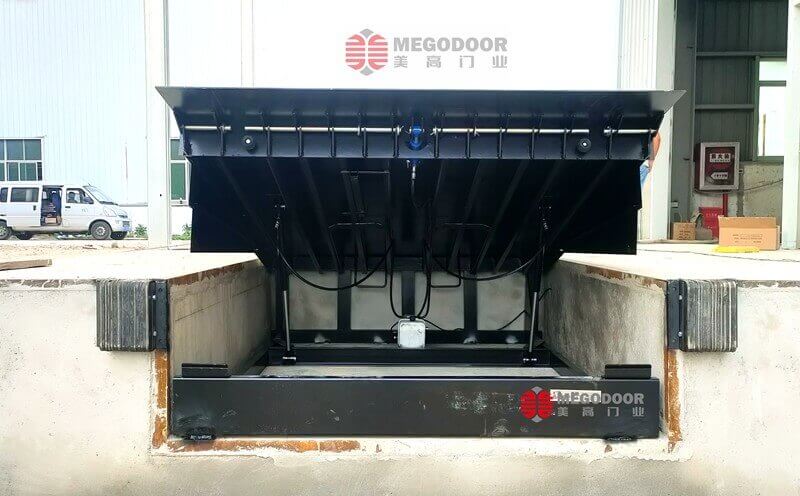
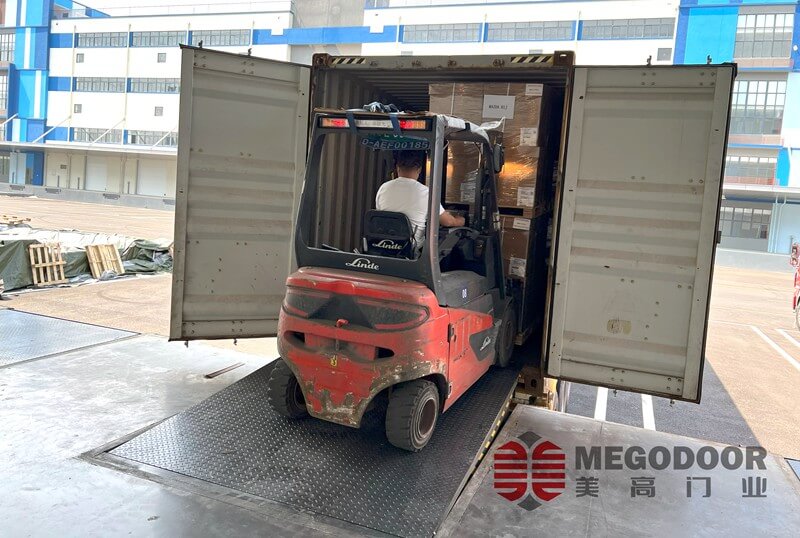
In industrial environments, a loading dock is a designated area for loading and unloading goods. By setting up a loading dock, forklifts can safely and efficiently enter and exit transport vehicles to complete cargo handling tasks. To bridge the height differences or gaps between the loading dock and various transport vehicle beds, height adjustment boards (also known as dock levelers) are typically installed on the dock, ensuring that forklifts can smoothly access the vehicles.
Importance of Handling Activity Index
Understanding the “Handling Activity Index” helps explain why loading docks are necessary. This index refers to the number of operations (gathering, lifting, raising, moving) not required when handling items in a certain state. The higher the index, the easier it is to handle the items. For example:
- Unpackaged goods scattered on the ground have an activity index of 0;
- Packaged items or those placed in containers have an activity index of 1;
- Items loaded onto pallets or into containers have an activity index of 2;
- Goods loaded onto trucks or other mobile equipment have an activity index of 3;
- Items placed on conveyor lines have an activity index of 4.
Necessity of Loading Docks
In logistics centers, where goods pile up like mountains, especially during peak periods, manual handling becomes extremely challenging. Utilizing loading docks and their supporting facilities can significantly enhance efficiency and reduce confusion on-site. Specific advantages include:
- Facilitating material handling between the dock and warehouse;
- Easing the installation of conveyance devices;
- Enhancing the convenience of forklift operations;
- Reducing the workload of handling;
- Minimizing damage to goods through horizontal movement and improving safety.
Given the variety of truck types and their differing heights, hydraulic lift platforms are often needed to assist with loading and unloading. The height of the loading dock should be adjusted according to different truck models, generally ranging from 0.7 meters to 1.3 meters. Additionally, anti-collision measures and door seals for cold storage warehouses must be considered.
Design Considerations for the Number of Docks
When determining the number of docks, historical data on incoming and outgoing goods, the number of vehicles during peak hours, and the time required for each vehicle’s loading and unloading should all be taken into account. Future expansion or changes of the warehouse also need to be predicted to ensure a rational design.
Types of Dock Layouts
Common dock layout forms include four types:
- Enclosed Type: Docks located inside the factory building allow vehicles to directly enter for loading and unloading, providing optimal security and environmental control.
- Flush Type: Docks aligned with the outer edge of the warehouse, which, while less secure than enclosed types, still offer protection within the warehouse.
- Open Type: Docks protruding entirely outside the factory, leaving goods unprotected and making energy management more challenging.
- Sawtooth Type: Suitable for situations with shallow turning depths but occupies more internal warehouse space.
- Straight Type: Requires less internal space but demands deeper external turning areas.
Application of Platform Height Adjustment Boards
Platform height adjustment boards are installed at the front end of the platform to eliminate gaps and height differences between the platform and trucks, facilitating direct loading and unloading by forklifts. While these devices can adapt to various vehicle heights, they also come with drawbacks such as higher costs associated with electric drives and maintenance needs. Therefore, careful consideration is required during selection and installation to avoid excessive inclines that could affect efficiency and increase the risk of accidents.
In conclusion, loading dock platforms are indispensable parts of modern factories. Through proper planning and design, they not only improve loading and unloading efficiency but also ensure operational safety and minimize cargo damage. For new construction or renovation projects, it is advisable to fully consider the aforementioned factors to achieve the best balance between functionality and economy.